
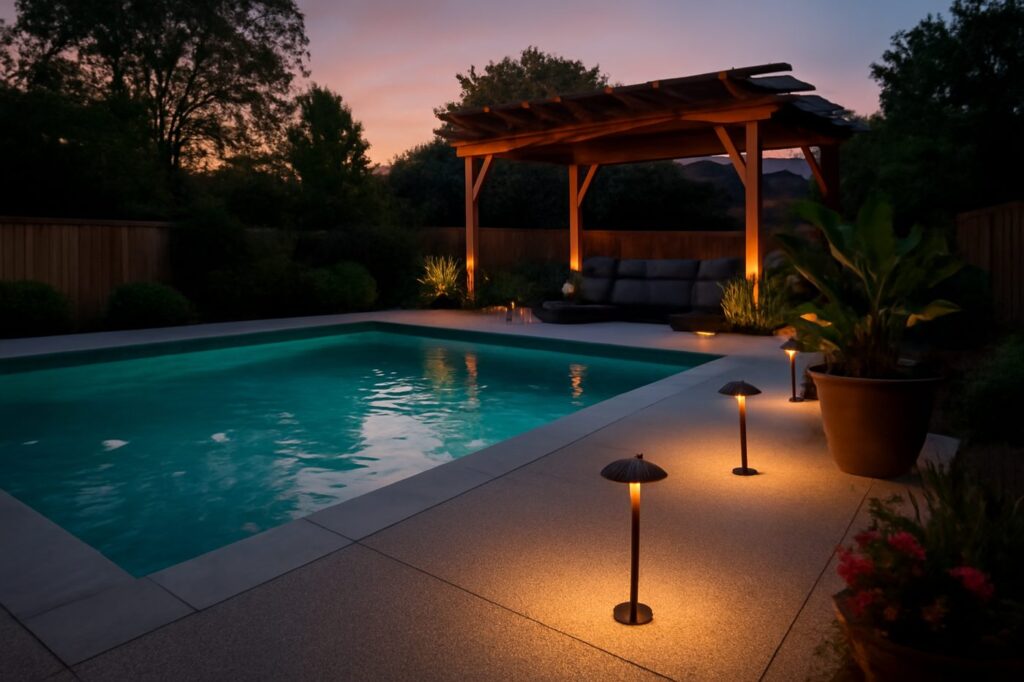
Upgrading the area around an existing pool transforms how you use and enjoy that space. Focus on materials, light, plantings, shade and safety to make the poolside more comfortable, attractive and easier to maintain without rebuilding the pool itself.
Decking options: materials, pros and typical costs
Choosing the right decking affects safety, maintenance and style. Consider slip resistance, heat absorption, drainage and how it connects to the pool coping. Below are common choices and what to expect.
| Material | Typical installed cost/ft2 | Maintenance |
|---|---|---|
| Poured concrete (plain or broom finish) | typically about $6–$18 | Low to moderate; can crack, may need sealing |
| Stamped or textured concrete | typically about $8–$25 | Moderate; reseal every few years |
| Pavers (concrete or clay) | typically about $10–$30 | Low to moderate; can shift, easy to replace |
| Natural stone (travertine, bluestone) | typically about $15–$50+ | Low; can be pricey but durable |
| Wood (cedar, pressure-treated) | typically about $15–$35 | Higher; periodic staining and sealing |
| Composite decking | typically about $30–$60 | Low; resists rot and staining |
Practical tips:
- Prioritize slip resistance—look for textured finishes or anti-slip additives.
- Keep surface colors light to reduce heat absorption in summer.
- Consider drainage: grade the deck so water sheds away from the pool and house.
Lighting: create ambience and improve safety
Good lighting extends usable hours, highlights features and improves safety. Combine layers of light for the best results.
Design approach
- Task lighting: steps, stairs and pool entry points.
- Accent lighting: uplights for trees, wall-washers for architectural features.
- Path lighting: guide routes from house to pool and to gates.
- Underwater pool lights: for swim safety and visual depth.
Installation basics (step-by-step)
- Plan layout on a scaled drawing—mark fixtures, circuits and switches.
- Decide power type: solar, low-voltage (12V) or line-voltage. Low-voltage LED is common for pools—efficient and safe when installed properly.
- Run conduit or cable according to local code. For hardwired systems or for fixtures near water, hire a licensed electrician.
- Mount fixtures on stable surfaces and aim lighting away from neighbors’ windows.
- Install dimmers or timers to control energy use and create scenes.
Cost note: exterior LED fixtures are typically about $50–$300 each installed, depending on complexity and whether an electrician is required. Always hire a licensed electrician for conduit work, and obtain permits when required.
Landscaping: plant choices and layout tips
Planting around a pool requires balancing beauty with low maintenance and debris control. Choose species that tolerate splash, sun and occasional chlorine or salt.
Plant selection guidelines
- Pick low-shedding trees and shrubs to minimize leaves and flowers in the pool.
- Choose salt- and chlorine-tolerant plants if splashing or a salt system is used.
- Use native or drought-tolerant species to reduce water and maintenance needs.
- Avoid invasive root systems near pool plumbing and decks—keep trees at least 15–20 feet away if root aggressive.
Layout and practical planting tips
- Create layered beds: low groundcovers and grasses near the deck, taller shrubs further back to frame views.
- Install a debris buffer—gravel or mulch strip directly adjacent to the deck—to trap leaf litter before it reaches the pool.
- Consider potted plants on the deck for flexibility and easier cleanup.
Shade solutions: comfort without compromising style
Shade reduces sun exposure and helps cool the poolside. Options range from simple to permanent.
- Freestanding umbrellas: low-cost, flexible, typically about $50–$500 each.
- Shade sails: modern look, typically about $200–$1,000 installed for small to mid spans.
- Pergolas: provide structure for vines or retractable canopies; typically about $2,000–$8,000 depending on materials and size.
- Retractable awnings: convenient for adjustable shade, typically about $1,500–$5,000 installed.
Design tip: orient permanent shade structures to block the sun in peak hours but avoid creating long-lived damp shaded areas that could foster algae or mildew on decking.
Safety fencing, gates and code considerations
Fencing is one of the most important upgrades for pool safety and—often—code compliance. Local building codes dictate barrier height, gate type and locking mechanisms.
Quick checklist for pool barriers
- Check local code for minimum fence height (typically about 4–6 feet depending on jurisdiction).
- Use a self-closing, self-latching gate with the latch out of reach of small children.
- Ensure gaps under the fence and between pickets are too small for a child to squeeze through.
- Consider visibility: transparent options (glass panels) allow easy sightlines but have higher cost and require specialized installation.
Cost examples: aluminum or chain-link pool fencing typically costs about $20–$60 per linear foot installed; glass panel fencing typically costs about $100–$300 per linear foot installed. Verify requirements for permits and inspections.
Putting it together: budgeting and phased upgrades
If budget or time is limited, phase upgrades so each step adds value:
- Address safety first—install or repair required fencing and gates.
- Fix drainage and slip hazards on existing decking.
- Add low-cost lighting and shade elements (path lights, umbrella) to increase immediate usability.
- Upgrade surfacing (concrete resurfacing, pavers or a new deck) as budget allows.
- Finish with landscaping and accent lighting for curb appeal and comfort.
Budget planning tips:
- Get three written estimates for major work; ask each contractor to itemize materials, labor and permits.
- Ask about warranties for deck materials, lighting fixtures and fence workmanship.
- Reserve about 10–15% contingency for unexpected drainage or structural issues revealed during work.
Safety note: For any work involving electrical circuits, gas lines or structural changes (deck additions, load-bearing attachments), hire licensed professionals and secure permits. Incorrect electrical work near water is a major hazard, and improper structural modifications can create collapse risks.
Conclusion
Upgrading the area around a pool is about balancing safety, comfort and style. Start with code-compliant safety features, then choose decking, lighting, shade and plants that match your lifestyle and maintenance tolerance. With phased planning and the right pros on call, a poolside refresh can dramatically expand how much you use and enjoy your outdoor living space.