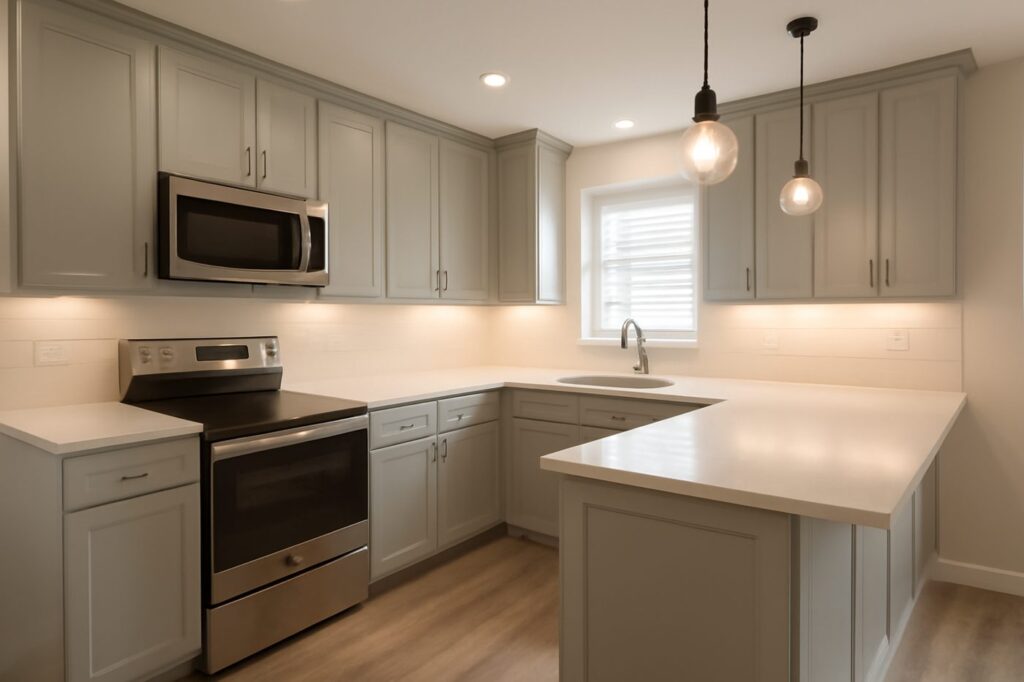
Updating a kitchen on a budget means choosing the right combination of cosmetic changes, selective replacements, and smart labor decisions. We’ll walk through where spending matters most, where to cut costs without sacrificing style, and how to plan a realistic project with typical price ranges so you can get the biggest impact for your dollars.
Set your budget and priorities first
Before shopping for finishes or contractors, decide how much you want to spend and what outcome matters most. Small budgets should target appearance and function; larger budgets can change layout or replace major systems.
- Decide your total budget and a 10–15% contingency for surprises.
- Rank priorities: storage, cooking performance, resale value, or aesthetics.
- Assess what currently works: can layout stay the same? Are appliances functional?
Step-by-step planning:
- Measure your kitchen and take photos from multiple angles.
- List must-haves vs nice-to-haves tied to your budget.
- Get 2–3 quotes for any work involving plumbing, gas, or electrical.
Where to splurge: priority upgrades that pay off
There are a few places where spending a bit more gives long-term benefit in use, durability, and resale. Focus upgrades on systems you use every day.
1. Cabinets or cabinet fronts
Cabinets define the look and control storage. If frames are sound, refacing doors or replacing only doors and drawer fronts saves money while refreshing the room.
- Typical costs: refacing doors or replacing fronts typically/about $1,000–$6,000 depending on size and material.
- When to splurge: replace full cabinet boxes or install semi-custom cabinets if you need better storage solutions or a new layout.
2. Countertops at the cooking zone
Countertops see the most wear. Invest in a durable surface where you prepare food most often.
- Typical costs: laminate typically/about $400–$900; butcher block typically/about $800–$2,000; quartz typically/about $1,500–$4,000.
- Save by keeping runs of lower-cost material in less-used areas.
3. Lighting and plumbing fixtures
Good task lighting and a reliable faucet are inexpensive wins for daily use. Better fixtures also make the kitchen feel finished.
- Typical costs: quality pendant or under-cabinet lighting typically/about $150–$600 per fixture installed; a solid single-handle faucet typically/about $200–$600 installed.
Where to save: high-impact, low-cost moves
Small changes can dramatically update a kitchen without major expense. These are ideal if your layout is fine and appliances work.
- Paint walls and cabinets: A fresh coat of paint is one of the cheapest ways to change mood and perceived quality. Consider painting cabinet boxes and replacing doors only if needed.
- Swap hardware: New knobs and pulls typically/about $2–$10 each; pick a consistent finish for cohesion.
- Refinish or paint existing countertops: Laminate countertop repair or paint kits are inexpensive for short-term fixes.
- Install a new backsplash: Peel-and-stick tile or affordable ceramic tiles refresh the space for a modest outlay.
- Open shelving: Remove a row of upper cabinet doors or replace a cabinet section with open shelves for display — lower cost and visually lighter.
Typical budget breakdown (by scope)
Below is a simple guide showing typical about ranges for three common project scopes. Prices vary by region, kitchen size, and contractor rates.
| Project scope | Typical total | Main items included |
|---|---|---|
| Mini refresh | about $1,000–$5,000 | Paint, hardware, lighting, minor cabinet repairs |
| Mid-range update | about $5,000–$20,000 | New countertops, selected cabinet fronts, appliances, flooring upgrades |
| Major remodel | about $20,000–$60,000+ | New cabinets, layout change, higher-end appliances, flooring |
Finish recommendations by budget
Choose finishes that match your budget and lifestyle: durable and neutral for long-term value, bolder looks if you plan to change again soon.
Countertops
- Low budget: high-quality laminate or butcher block — warm and affordable.
- Mid budget: quartz or engineered stone for durability and low maintenance.
- High budget: natural stone like granite or marble for luxury — pick honed finishes for busy kitchens.
Cabinet finishes
- Painted solid colors for a modern refresh; matte whites or soft grays are timeless.
- Thermofoil or laminate doors are budget-friendly; solid wood or painted MDF performs better with age.
Floors
- Luxury vinyl plank is water-resistant and affordable — a great mid-range option.
- Tile is durable and good near sinks; consider larger-format tiles to reduce grout lines.
Step-by-step project plan
Follow these steps to keep a budget kitchen update organized and efficient.
- Plan and measure: finalize layout decisions and prioritize changes. Order long-lead items first (cabinets, countertops).
- Hire pros where necessary: get quotes from licensed electricians, plumbers, and cabinet installers. For gas and electrical work, always hire a licensed pro.
- Demo and prep: clear out the kitchen. Expect dust — cover nearby rooms. Dispose of old materials responsibly.
- Make structural and system changes: only if layout changes are required. Safety note: load-bearing walls need an engineer; moves to gas lines require a licensed technician and inspections.
- Install cabinets and countertops: follow manufacturer instructions or use professional installers for accuracy.
- Finish lighting, plumbing, and trim: install new fixtures, backsplashes, and paint touch-ups.
- Final walk-through: check appliance connections, cabinet operation, and caulking for water-tight seals.
Safety notes: shut off power for electrical work, turn off gas supply before any gas line work, and secure permits if required by local code. Improper gas or electrical work is hazardous; hire licensed specialists.
Conclusion
A budget kitchen update succeeds when we pick a few high-impact upgrades and pair them with smart savings. Spend where durability and daily use matter most — cabinets, countertops, and good lighting — and save on paint, hardware, and decorative touches. With a clear plan, realistic cost ranges, and attention to safety, a refreshed kitchen can feel like a much bigger investment than it cost.